


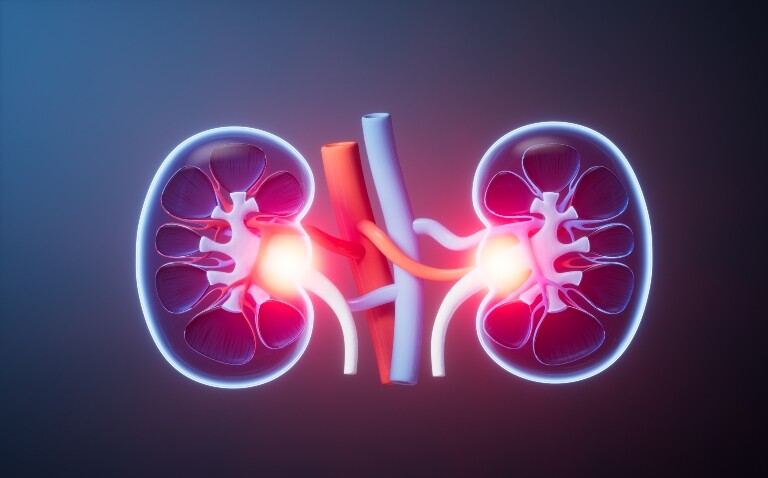
Dr Chiara Re and Professor Grant Stewart discuss the development, launch and success of the UK’s first one-stop renal mass biopsy clinic designed to cut waiting times for patients with suspected renal cancer through real-time confocal pathology, with earlier diagnosis and enhanced patient experience being just two of the benefits.
Renal mass biopsy plays a crucial role in modern kidney cancer management. It guides decisions for active surveillance, surgery, ablation and systemic therapy while preventing the unnecessary treatment of benign lesions.
As active surveillance and minimally invasive therapies become more widely adopted, and as cases of incidental small renal masses continue to rise, demand for biopsy has increased.
However, the conventional diagnostic pathway is fragmented. Patients typically wait weeks for histology, delaying treatment decisions and planning. Interestingly, a 2024 study found that one in four patients may decline a biopsy due to these delays.
Why was a one-stop clinic for renal cancer needed?
The one-stop clinic model – already well established in other cancer types such as breast and bladder cancers – offers an attractive solution. However, rapid pathology reporting has always been a limiting factor.
Working in close collaboration with interventional radiologists, uropathologists and clinical nurse specialists, our team at Addenbrooke’s Hospital in Cambridge, UK, has introduced a novel pathway that integrates same-day biopsy with rapid ex vivo confocal microscopy to provide an immediate provisional diagnosis.
This initiative aims to significantly reduce diagnostic delays, enhance the patient experience, support shared decision-making, and streamline cancer pathways in line with the national Faster Diagnosis Standard and Getting It Right First Time recommendations.
Building the one-stop renal mass biopsy clinic
The Cambridge kidney One Stop Mass Investigation Clinic (CkOSMIC) was established in January 2024 as a dedicated service staffed by a multidisciplinary team (MDT) including consultant urologists, oncologists, interventional radiologists, uropathologists, pathology technicians, specialist nurses and care coordinators.
Incorporating a confocal microscope capable of producing digital, haematoxylin and eosin-like images immediately after biopsy provided the missing link needed to establish a true same-day diagnosis.
CkOSMIC integrates seven steps into a streamlined clinical pathway:
- Patients referred through MDT discussion attend the clinic for assessment, biopsy and treatment planning in a single visit
- An ultrasound-guided biopsy is performed under local anaesthesia
- Fresh tissue is immediately stained and assessed by ex vivo confocal microscopy
- An expert uropathologist reviews the digital images in real time and provides a provisional diagnosis within minutes
- A urologist or oncologist discusses the diagnosis and agreed treatment plan with the patient during post-biopsy recovery
- Patients are discharged the same day, typically after four hours of observation
- A second MDT review occurs when final histology becomes available, ensuring diagnosis consistency and confirming the initial management plan.
Patient selection and workflow optimisation
During our initial evaluation phase, 50 patients suitable for renal mass biopsy were referred to the clinic. Most had localised renal masses for which a timely diagnosis was essential to decide between active surveillance, ablative therapy or surgery. Some patients with metastatic disease were also included, as biopsy is mandatory for systemic therapy planning.
Of these patients, 48 received a same-day provisional pathology result. Four biopsies required immediate same-day repeat sampling after confocal review showed no lesional tissue, thus avoiding delays that would have occurred in the traditional pathway.
Only two cases remained inconclusive on confocal microscopy, requiring additional investigations for final assessment.
Early outcomes and impact of CkOSMIC
Early results demonstrate that the clinic has already reduced diagnostic timeframes, improved MDT decision-making and received overwhelmingly positive feedback from patients and healthcare professionals.
Confocal microscopy demonstrated 94% sensitivity, 100% specificity and 87.5% complete concordance with final histology. Importantly, no cases were incorrectly classified as benign when malignant, or vice versa.
Where confocal imaging could not determine subtype – for example, distinguishing between oncocytic tumours and clear cell renal cell carcinoma – the provisional diagnosis was still sufficient for same-day clinical decision-making.
Compared with the standard pathway, the time from biopsy to diagnosis and to treatment decision decreased from 7 days to 0 and from 24 days to 0, respectively. Additionally, the time from first clinical consultation to treatment plan was reduced by 30 days.
This represents a major improvement in cancer pathway performance by alleviating patient anxiety associated with waiting for results. It also allows NHS England’s 28-day Faster Diagnosis Standard to be met.
Patient and clinician experiences of the renal mass biopsy clinic
CkOSMIC reported 100% patient satisfaction, with high ratings for communication, shared decision-making and overall pathway design. Clinician satisfaction was also high at 96%. All participating pathologists found confocal imaging reliable and accurate.
Collectively, these findings emphasise strong staff engagement and a highly patient-centred approach. Three-quarters of the participating clinicians believed the model should be adopted elsewhere.
Although some hospitals offer streamlined diagnostic pathways, no other UK centre currently provides a one-stop renal mass biopsy clinic with on-site confocal pathology.
These results advocate for broader adoption of the model, especially in high-volume renal cancer centres. Successful implementation, however, will require access and investment in a confocal microscope, specialist pathology expertise and sufficient staffing.
The future of one-stop renal mass biopsy
CkOSMIC is expected to be expanded and refined in the coming years, with several developments already planned. These include increasing capacity to handle a greater volume of referrals and allowing patients to access the one-stop pathway directly, without needing an initial outpatient appointment.
Integration of artificial intelligence-assisted image interpretation is also planned to support real-time decision-making, while confocal microscopy may be used to triage tissue for research applications such as single-cell sequencing.
Additionally, in the longer term, the model may be adapted for use in metastatic renal cell carcinoma and incorporated into clinical trial pathways.
The CkOSMIC team aims to support the one-stop renal mass biopsy clinic approach as a standard component of renal cancer care across the UK, enhancing patient experience and supporting the national ambition to streamline cancer pathways.
Authors
Dr Chiara Re
Urology clinical fellow
Professor Grant D. Stewart
Professor of surgical oncology and honorary consultant urological surgeon
Both of the Department of Surgery, University of Cambridge; Department of Urology, Cambridge University Hospitals NHS Foundation Trust; and CRUK Cambridge Centre, University of Cambridge, UK
link